
A Recovered Tradition
Since 1984, Potes has celebrated every second weekend of November the festival that exalts its most emblematic product: the Liébana orujo.
Historical Context and Monastic Origins
The Orujo Festival of Potes, held annually during the second weekend of November in the Cantabrian town of Potes, is one of the most consolidated gastronomic and ethnographic phenomena in northern Spain. This festivity, which exalts the distillation of Liébana's local brandy using ancestral techniques, represents the culmination of a long-term historical and socio-economic process dating back to the Early Middle Ages.
The Liébana region, geographically delimited by the Picos de Europa massif and the Cantabrian Mountains, has a microclimate with strong Mediterranean influences that historically favored vine cultivation, distinguishing it from the predominantly Atlantic tone of the Cantabrian coast. Documentary evidence preserved in medieval cartularies shows that orujo production began linked to the exploitation of vineyards by the monastic communities that settled in the region during the repopulation campaigns of the Asturian kingdom, led by ecclesiastical and lay settlers from the Meseta. Monks established in monasteries such as Santo Toribio de Liébana—a historic center of Jacobean pilgrimage that houses the Lignum Crucis and the theological legacy of Beatus of Liébana—processed the skins, seeds, and stems resulting from grape pressing to extract a high-proof liquor through distillation.
This initial distillation responded to a fundamental adaptive and economic need. Given that the difficult conditions of orographic isolation limited the import of goods during the harsh Liébana winter, orujo acted not only as a stimulant to combat low temperatures and provide vigor in demanding agricultural tasks but also as a broad-spectrum medicinal agent. Its ability to preserve certain herbs, such as mountain tea or wild chamomile, gave rise to healing traditions that still persist in Liébana's villages.
The Liébana Alquitara: Ancestral Technology
The core technological element of this tradition is the "alquitara," a uniquely designed still introduced by Arab artisans in the Iberian Peninsula and later adapted to the needs of Liébana's distillers. Unlike the conventional alembic, the alquitara is characterized by being made entirely of copper and consisting of three interlocking parts: the boiler (where the skins are boiled), the hood (where the vapor rises), and the upper cup, which acts as a cold water condenser, allowing the alcohol vapor to condense on the inner wall and flow to the outlet. This remarkably slower method requires exhaustive heat control and gives Liébana's Orujo exceptional organoleptic characteristics.
The Period of Clandestinity
The modern history of orujo was marked by clandestinity. In the mid-20th century, laws imposed strict control over private distillation through a special tax on alcohol. The Civil Guard and customs agents severely persecuted the lighting of alquitaras in private homes. Many Liébanans had to distill their liquors in the strictest secrecy, carrying the heavy copper pieces up to remote barns, high pastures, or distilling at dawn so the unmistakable smell of evaporated alcohol wouldn't give them away. During this period, orujo consolidated itself not only as a beverage but as a symbol of cultural and identity resistance of the region.
Institutional Rebirth: 1984 Onwards
The definitive turning point came in 1984 when a joint initiative by the Potes City Council and local producers culminated in the organization of the first "Orujo Festival". Its objective was twofold: to pay tribute to generations of clandestine distillers and to lay the foundations for the legalization and regulated commercialization of this beverage. Today, the event attracts tens of thousands of people, holds the award of Festival of National Tourist Interest since 2012, and is one of the most vital economic engines for the Liébana valley.
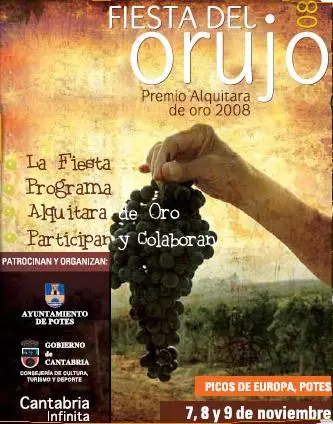
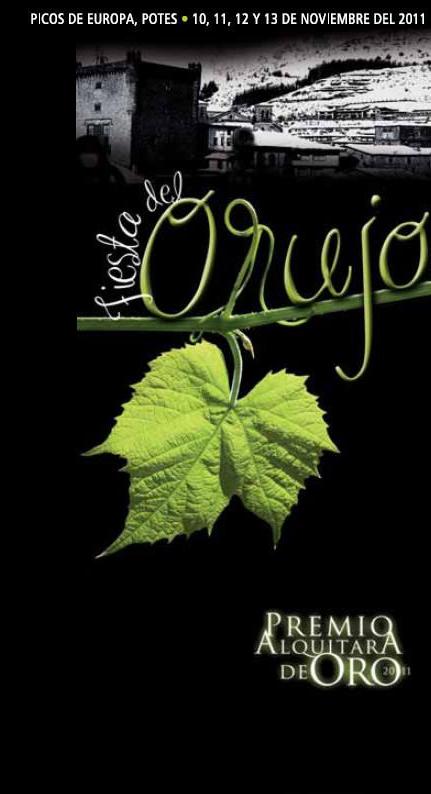
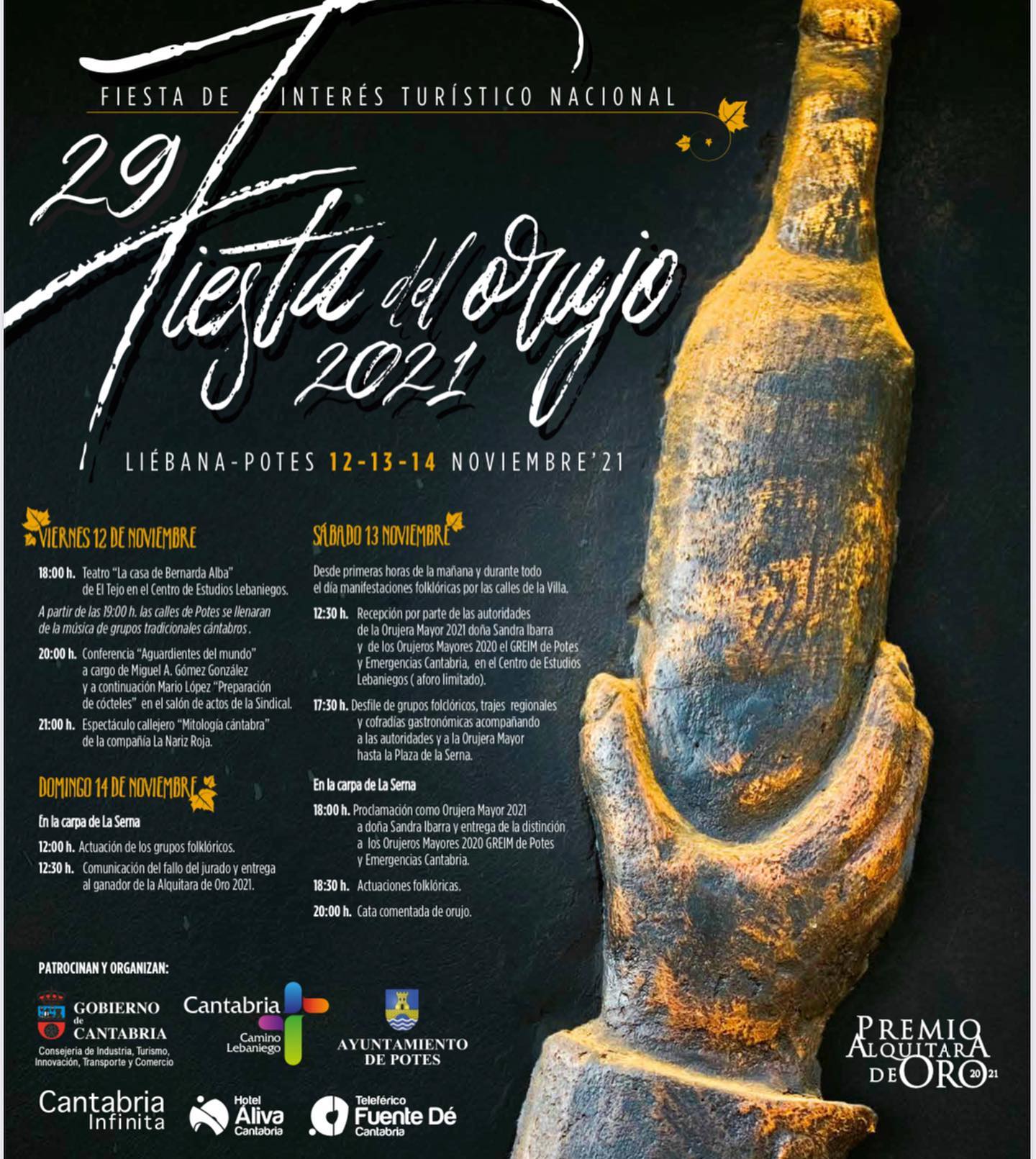
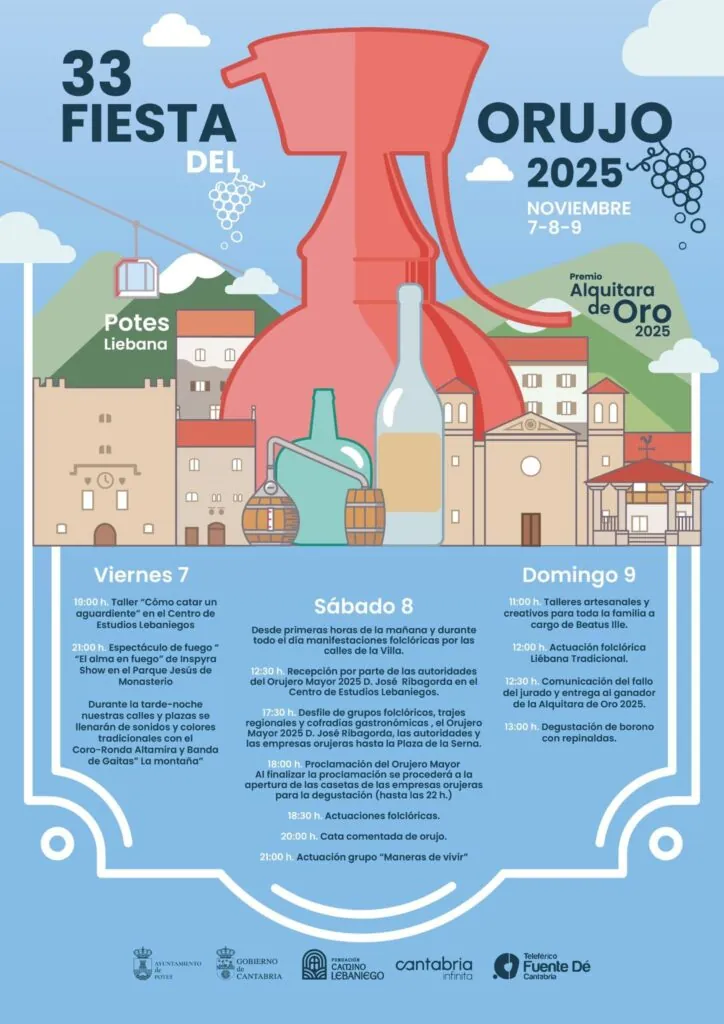
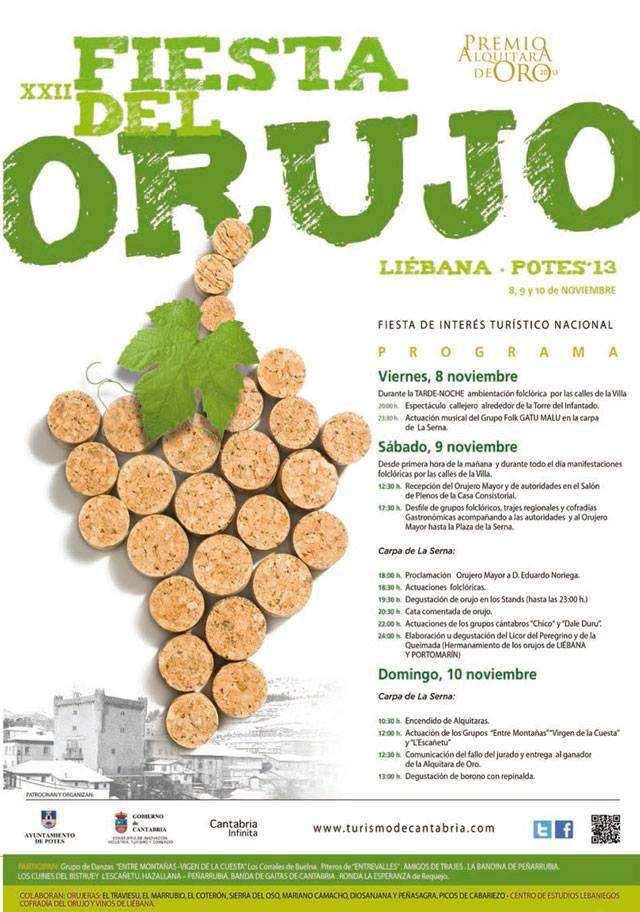
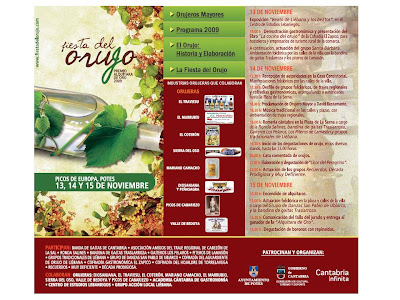
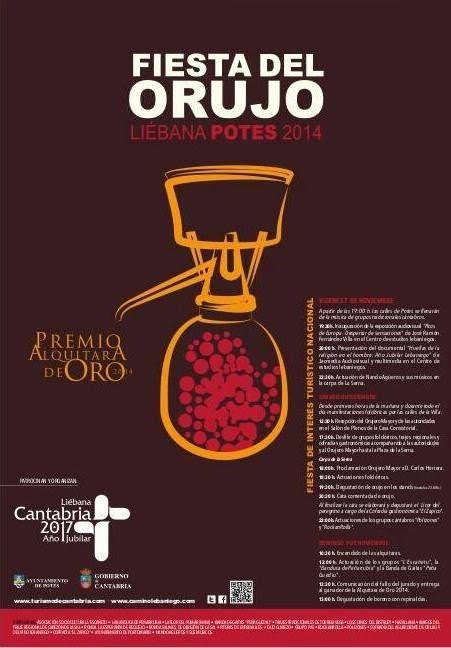
Historic Posters
A visual journey through the legacy of our festival over the years.
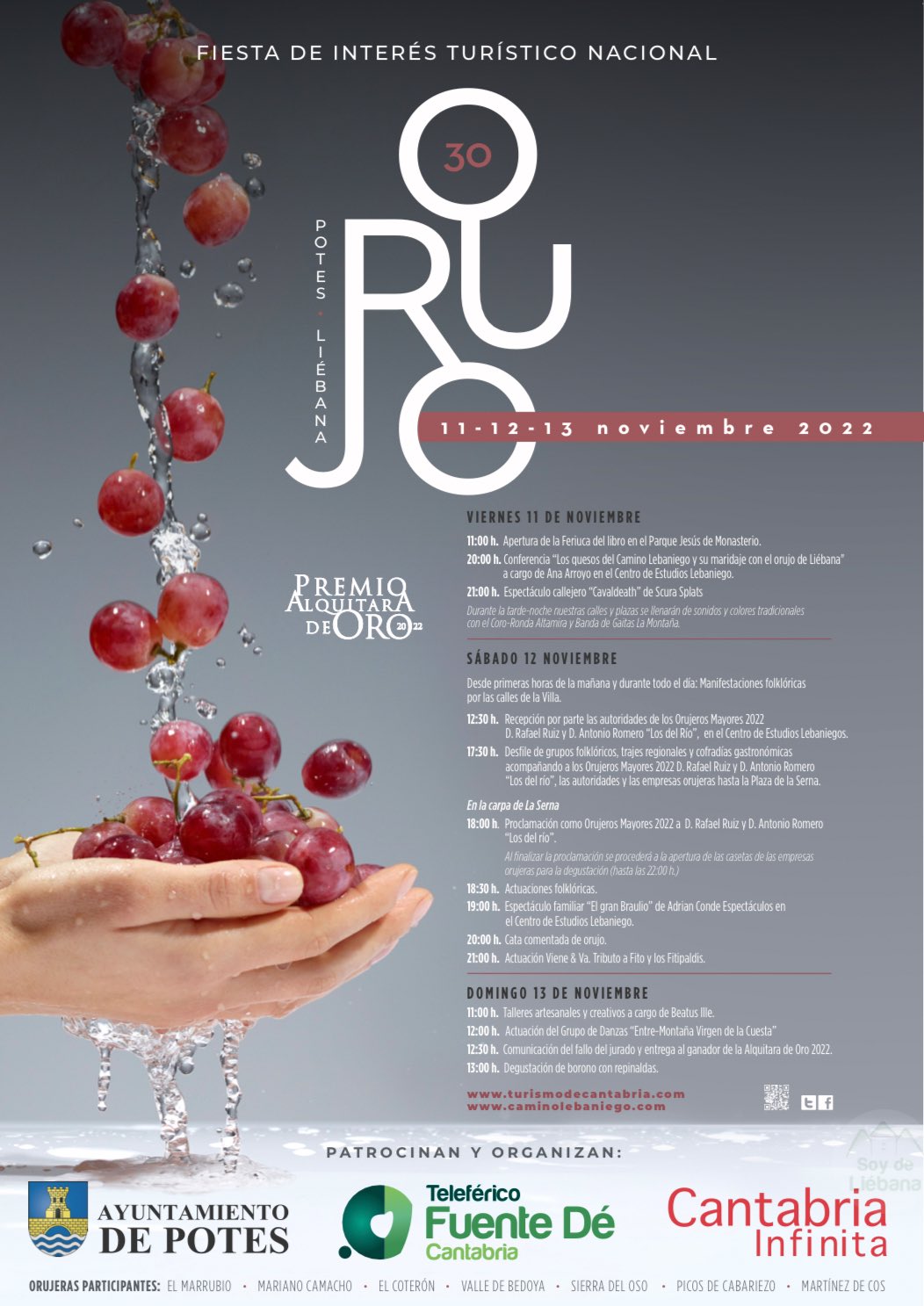
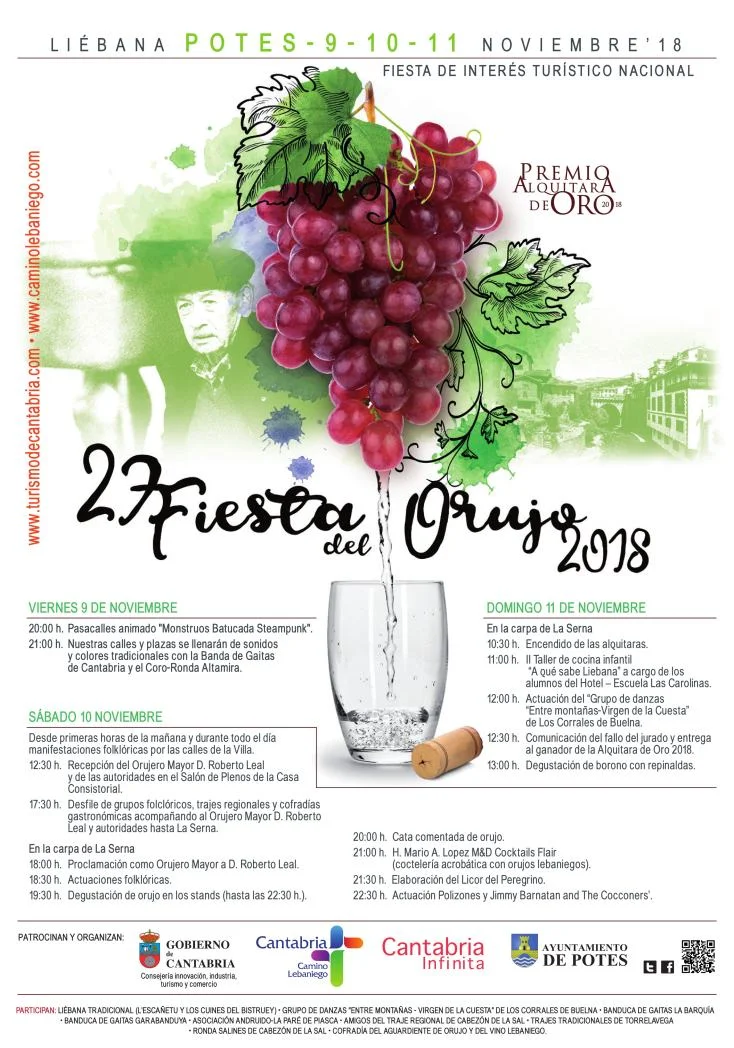
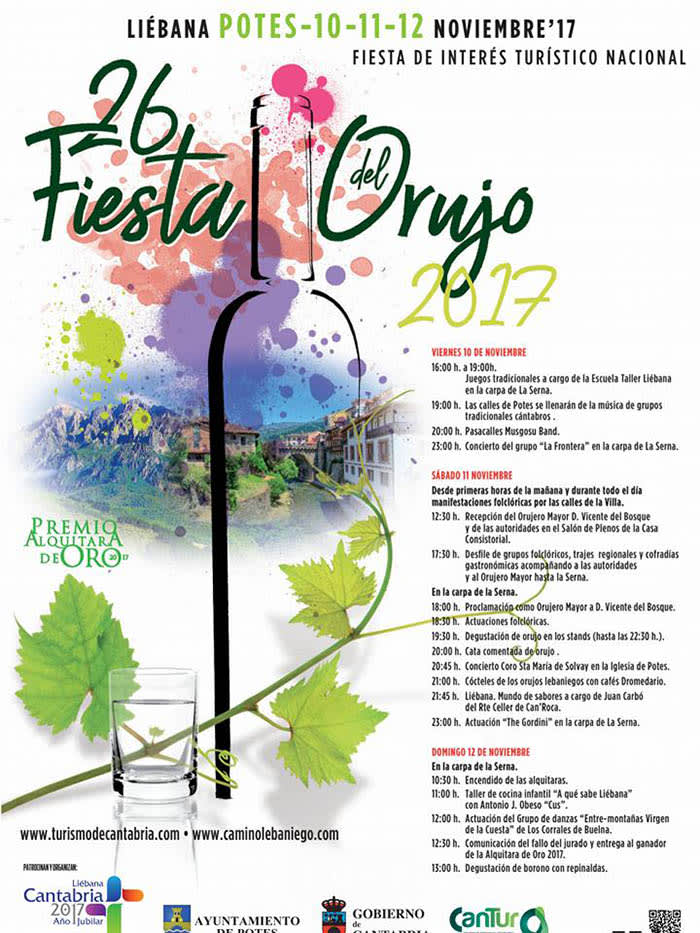
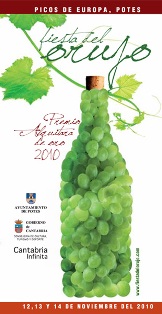
.jpg)
.jpeg)
.jpeg)
.jpeg)
Want to stay updated?
Leave us your email and we will notify you about the official programme, news from the Orujo Festival, and exclusive product offers.