
The Summit of Romanesque Sculpture in Cantabria
If Lebeña is the Mozarabic jewel, Santa María de Piasca is undoubtedly the cathedral of the Lebaniego Romanesque and one of the most relevant Romanesque constructions in all of Cantabria. Located in a beautiful and remote valley in the municipality of Cabezón de Liébana, this church was the heart of an early and powerful monastic complex whose origins date back to the late 8th or early 9th century.
Declared a National Monument in 1930, the current church is a fine, detailed masterpiece brimming with sculptural expressiveness that amazes every visitor.
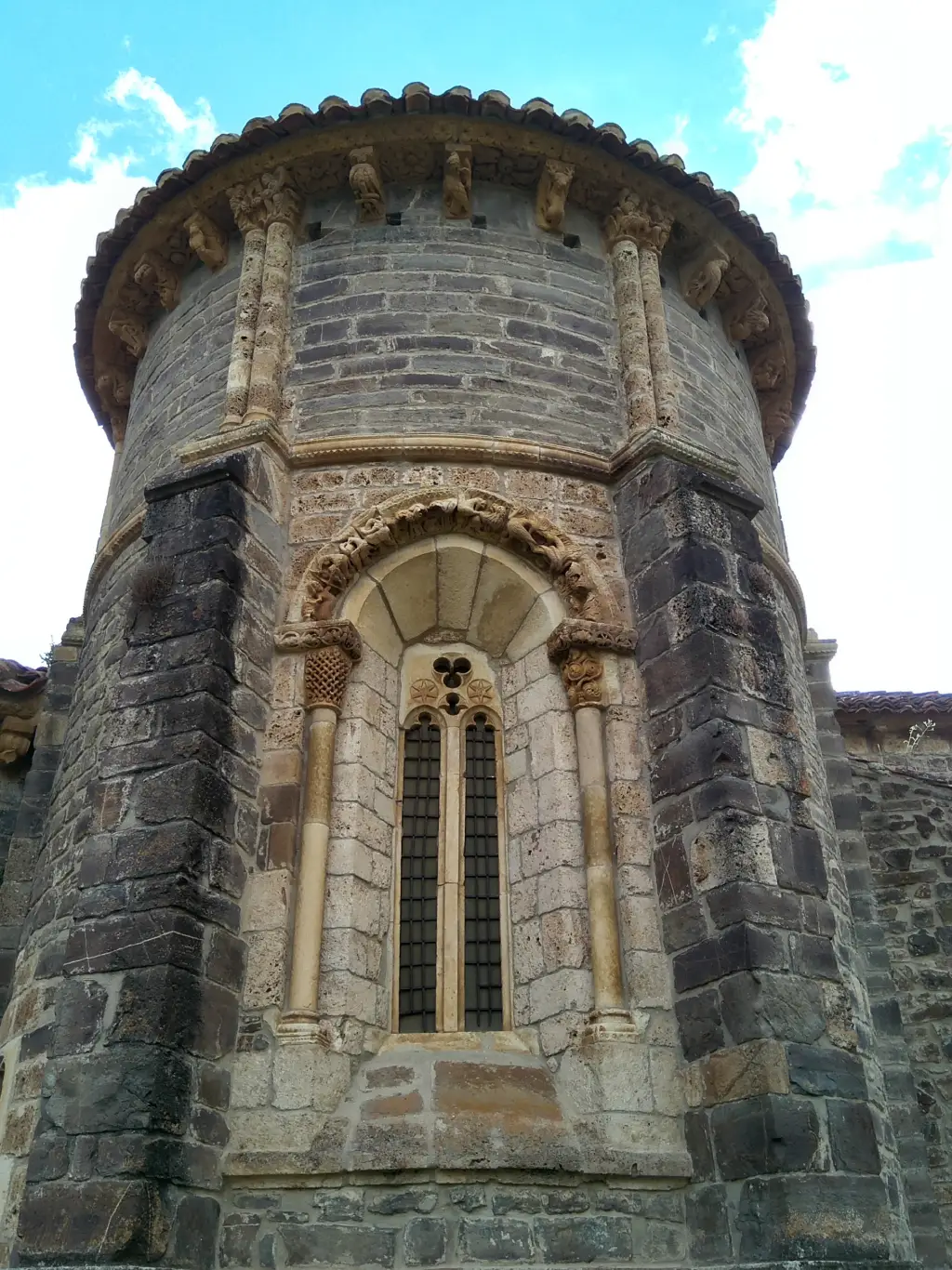
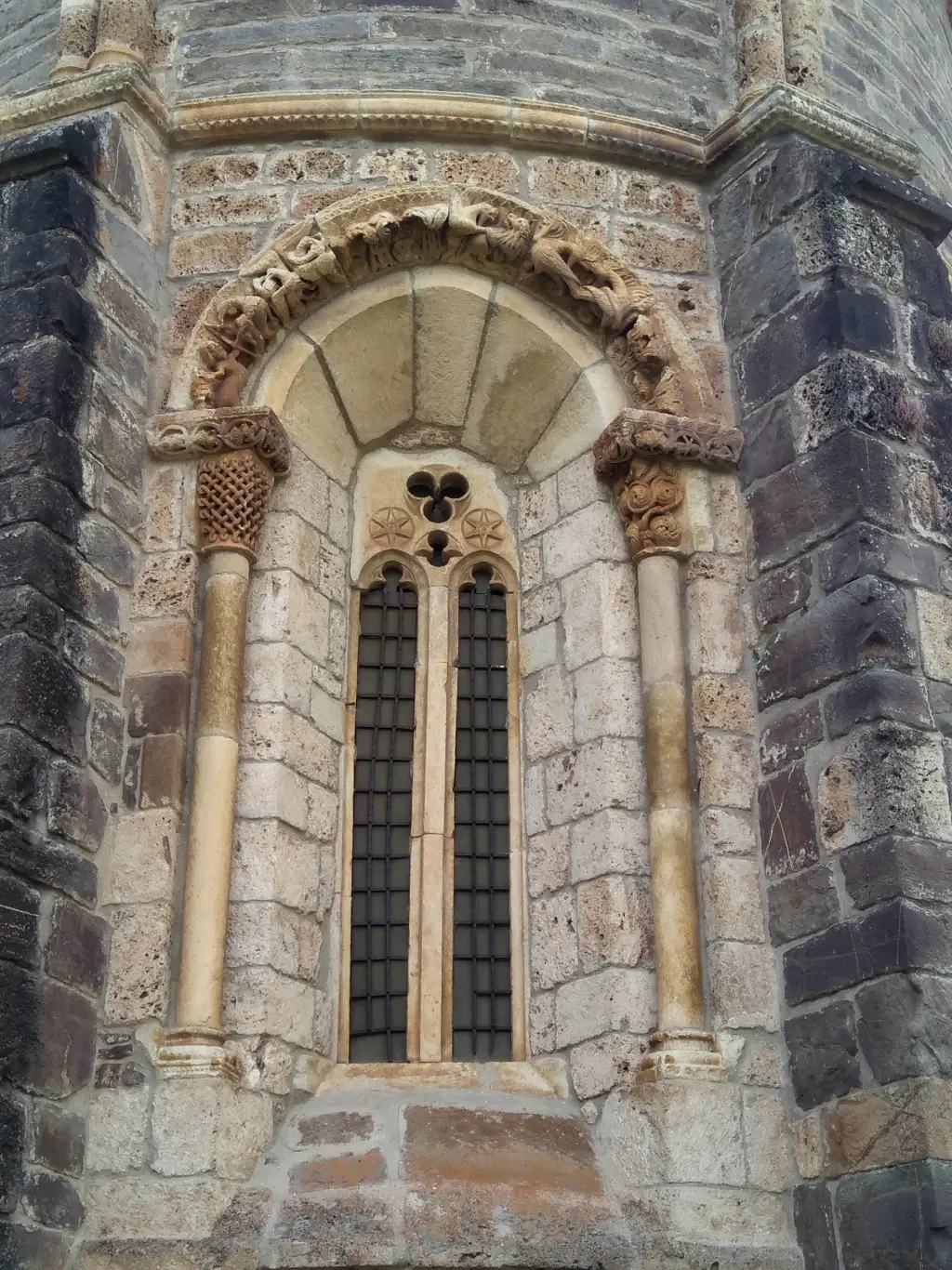
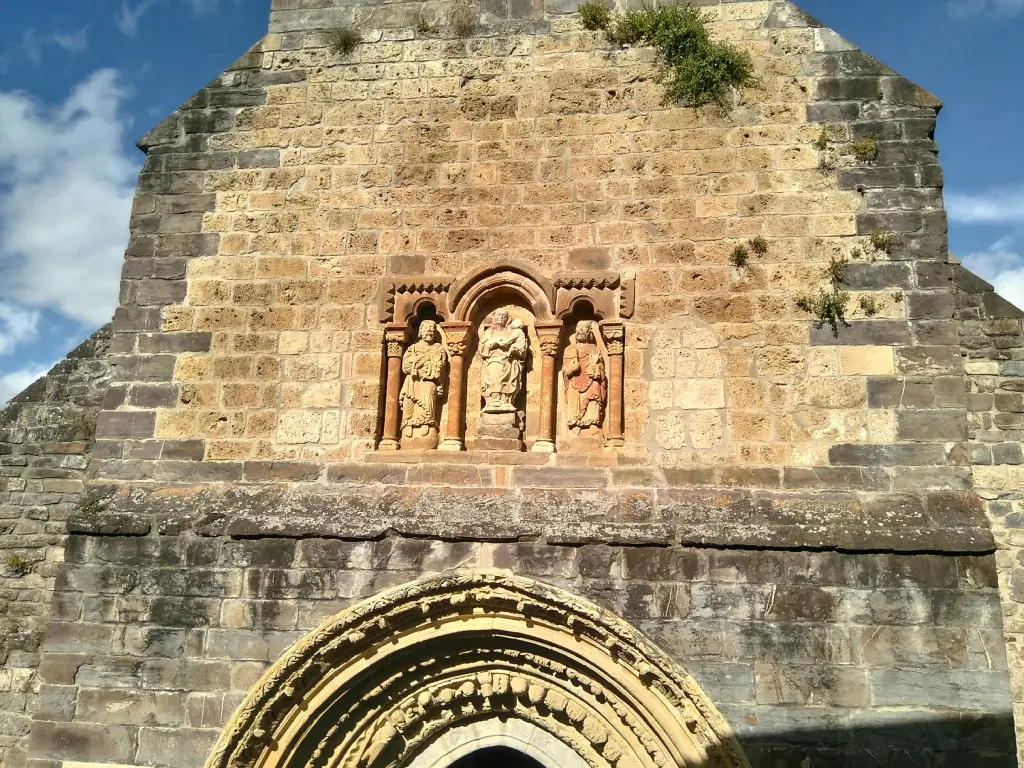
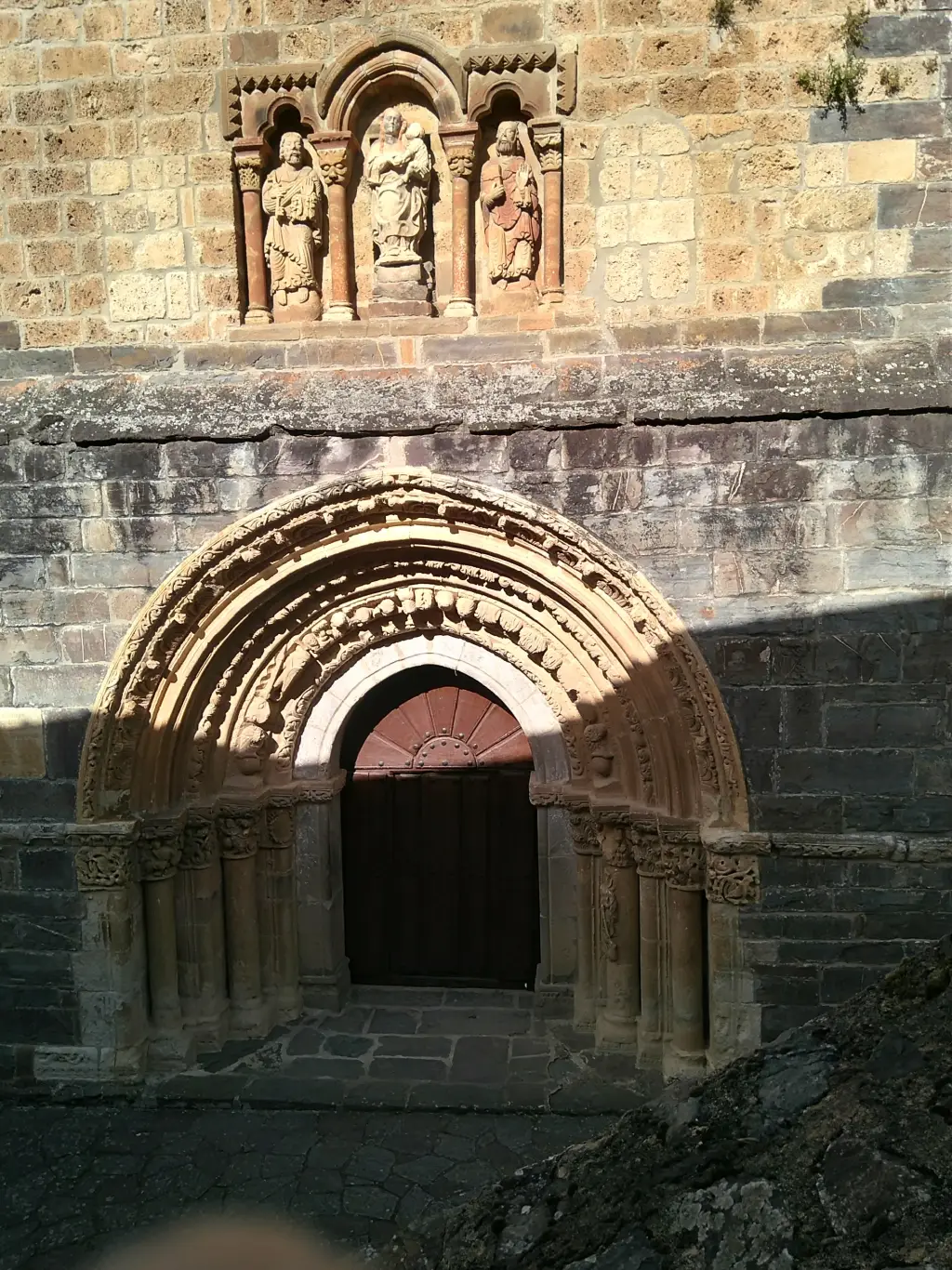
Gallery: Details of Santa María de Piasca
Discover the beauty of Romanesque sculpture and its surroundings:
1. History and Reconstruction in 1172
Its first documentary mention dates back to the year 930 (donation by Theoda and Agonti). Initially, it was a dual monastic community (monks and nuns) governed by the Rule of San Fructuoso. Under the protection of the Count of Liébana, it became one of the most important religious centers in the valley, rivaling the monastery of Santo Toribio in power and influence.
The current three-nave basilical church is the result of a major reconstruction promoted under the orbit of the powerful monastery of Sahagún. As an astonishing foundational plaque preserved on one of its walls reads, dated February 21, 1172, the work was directed by the famous master builder Covaterio.
2. The South Portal and its Masterful Sculpture
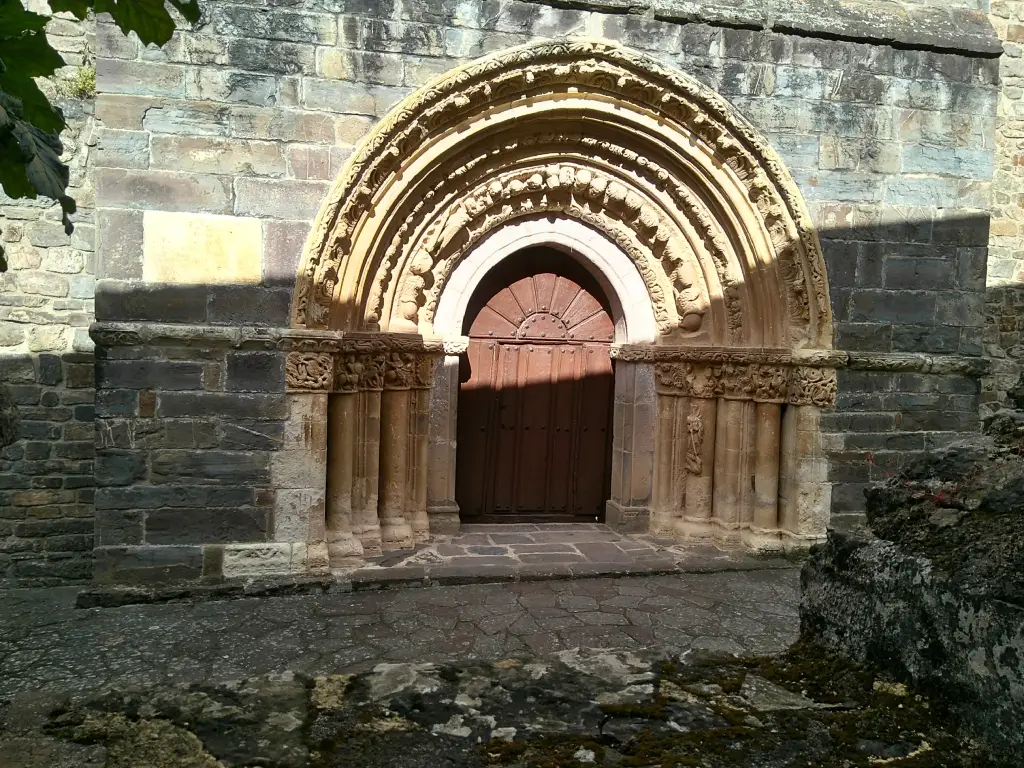
The southern portal is the main entrance and the place where technique and expression reach excellent mastery (Covaterio workshop):
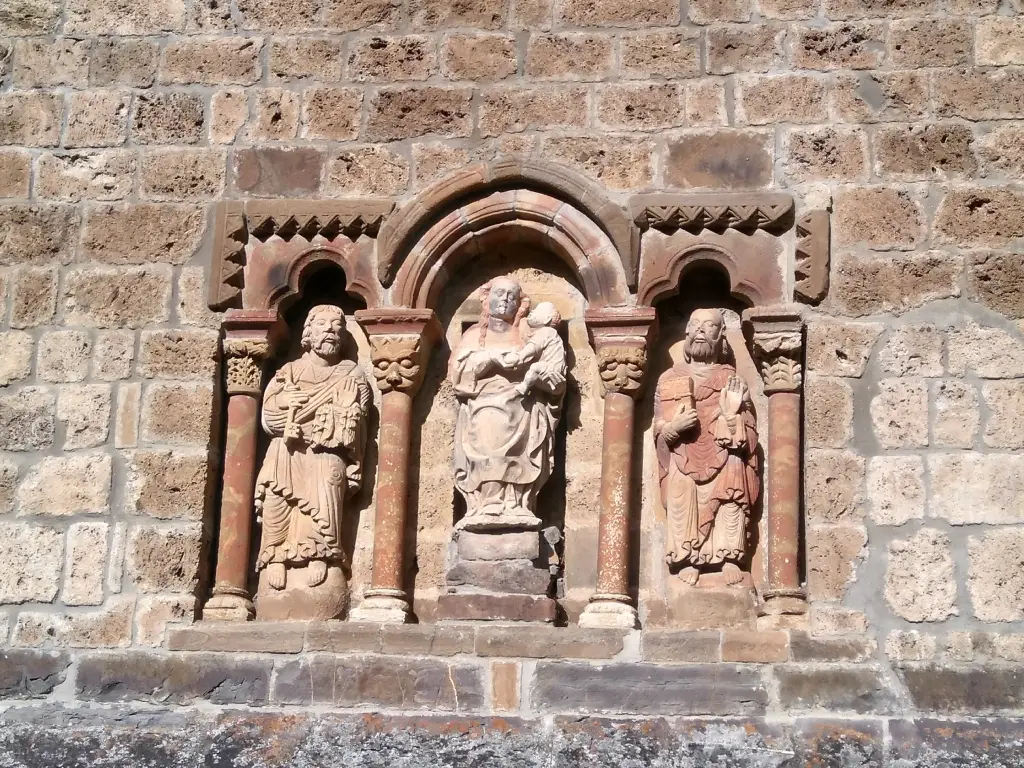
- Archivolts and capitals: Its five archivolts are profusely decorated and rest on columns with cylindrical shafts, filled with figures, musicians, centaurs, lions, and hunting scenes.
- Saint Michael and Saint Peter: The sculptures of Saint Michael fighting the dragon (the devil) and the imposing, almost full-round figures of Saint Peter (holding the keys) and Saint Paul stand out remarkably.
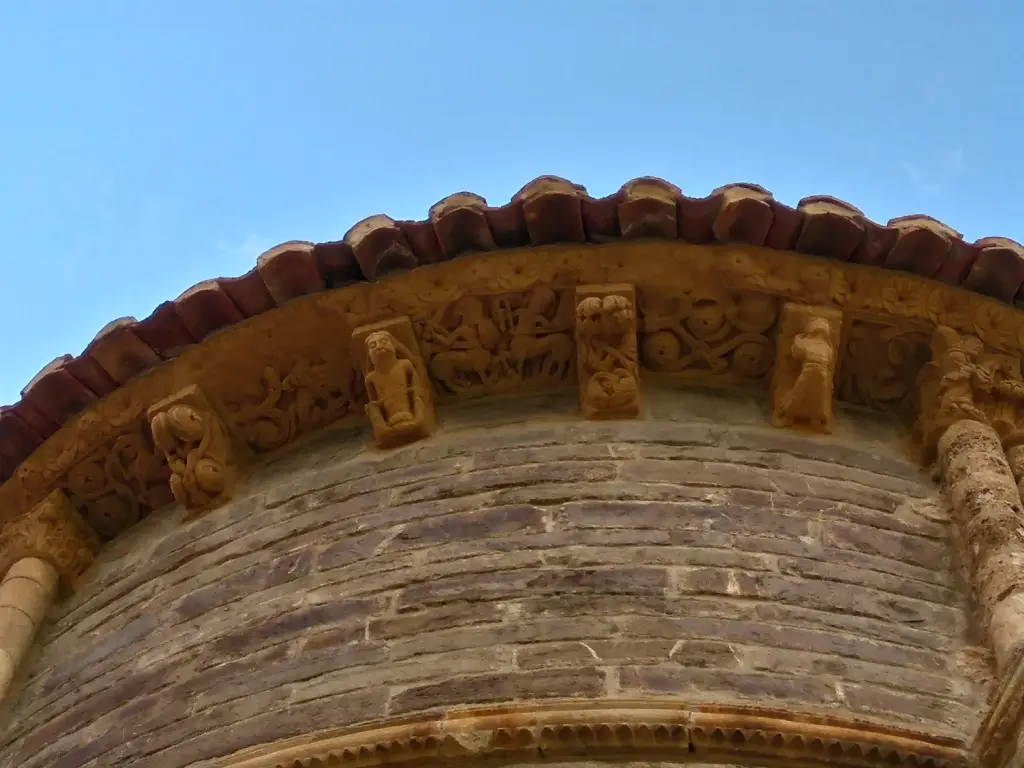
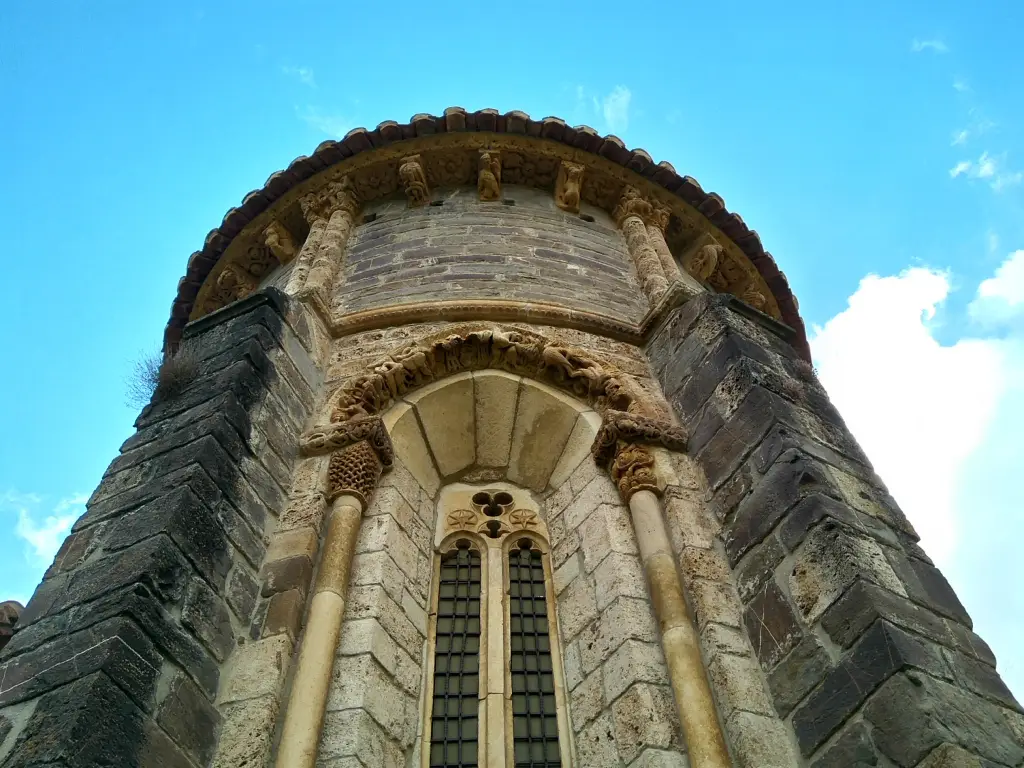
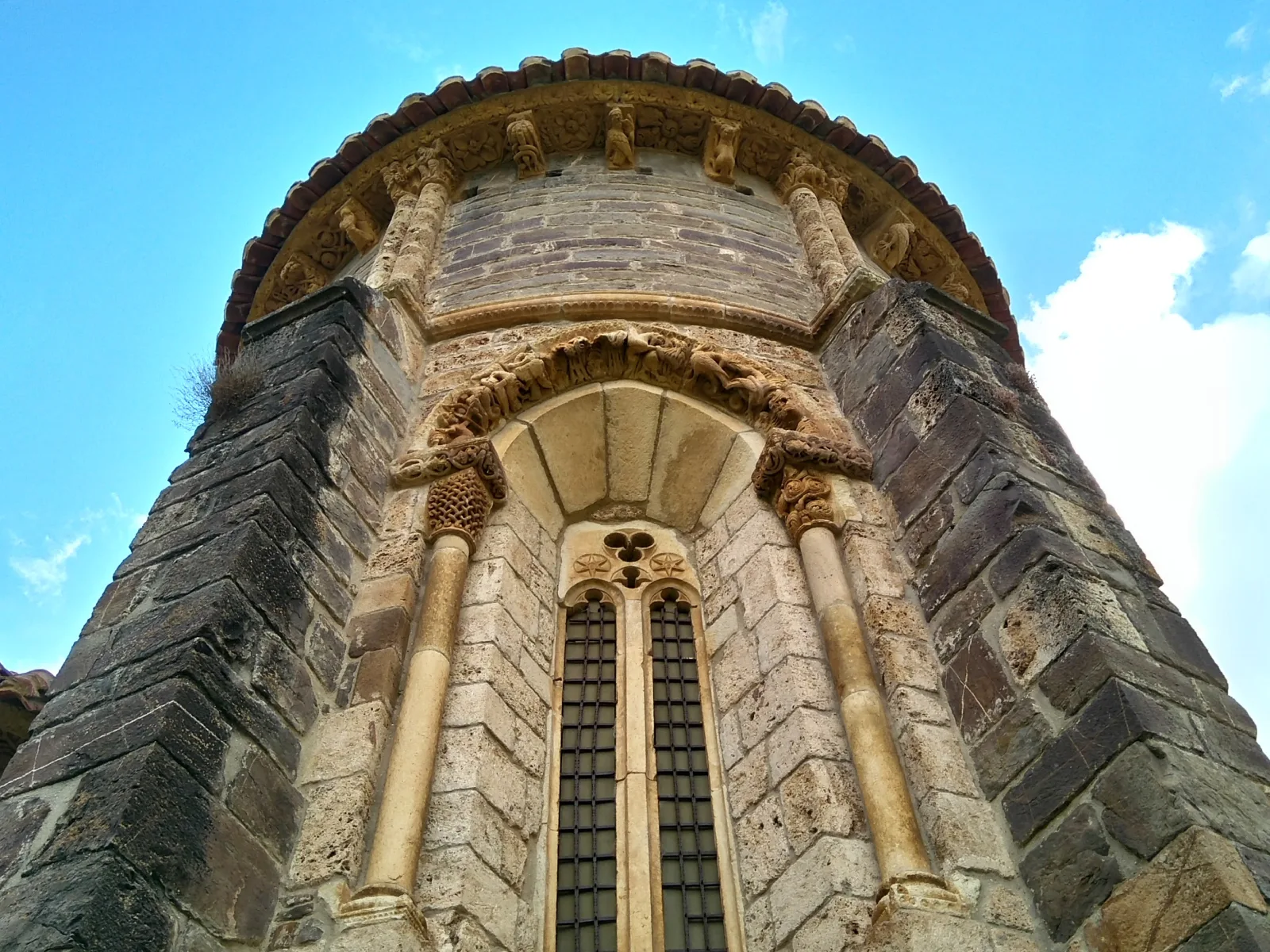
- Corbels and cornice: Under the roof and along the apses, look for the curious figures of the modillions and corbels, which include musicians, erotic scenes, masks, and fantastic animals of astonishing naturalism.
3. How to Visit
Like Lebeña, it has visiting hours with a person in charge who provides a guided explanation. The site invites silence and contemplation.
- Fact: Look for the inscription "Piasca" carved into the stone of the portico, an extremely rare detail in Romanesque art.
4. What to See Nearby
You are in the heart of Cabezón de Liébana.
- Potes: Just 10 minutes down the road.
- Routes: From here, beautiful trails lead into the surrounding beech forests.